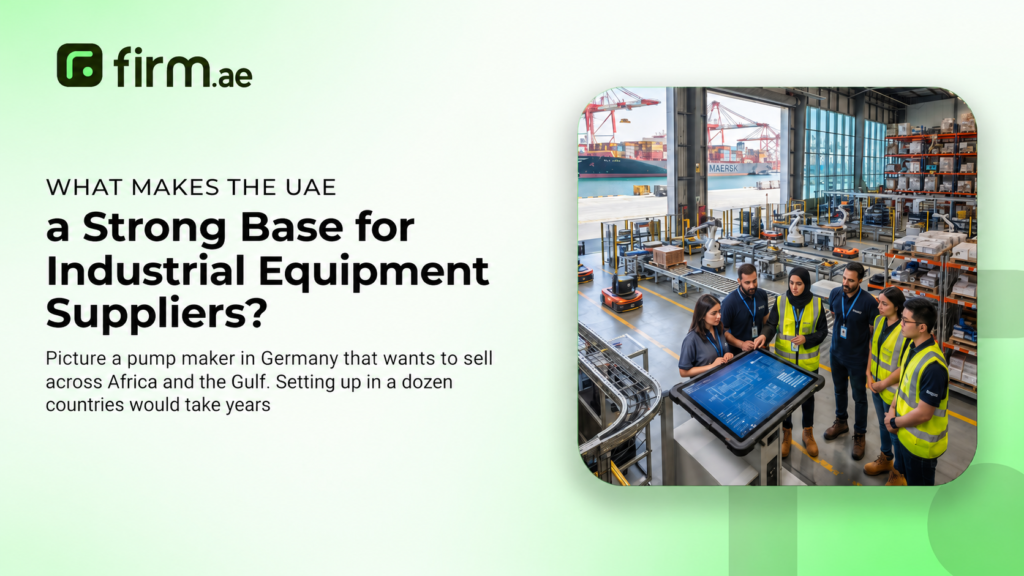
Picture a pump maker in Germany that wants to sell across Africa and the Gulf. Setting up in a dozen countries would take years. So it opens one warehouse in Jebel Ali and ships to all of them from there. This is the pattern behind the UAE’s rise as a base for industrial supply. In 2025 the country’s non-oil foreign trade passed AED 3.8 trillion for the first time according to the Ministry of Foreign Trade.
Searching for a top industrial equipment supplier in Dubai is easy. Checking one is harder. firms.ae lists licence-verified firms so you can start from a shortlist you can trust. This guide explains why global suppliers choose the UAE and how re-exports and free zones and trade deals work and how to find and check a supplier.
What Makes the UAE a Natural Base for Global Industrial Suppliers?
Location and logistics. The UAE sits between Asian factories and growing markets in Africa and the Middle East. Jebel Ali Port is the largest container port in the Middle East and it sits beside the Jebel Ali Free Zone and within reach of Al Maktoum International Airport. Suppliers can move heavy industrial machinery by sea and light high value parts by air from one hub.
The market is large too. Non-oil foreign trade reached AED 3.8 trillion in 2025 and grew another 13.1 percent in the first half of 2026 to AED 1.937 trillion. That depth is why many industrial equipment suppliers in the UAE serve customers well beyond the country’s borders.
Recent investment shows the trend. Khaleej Times reported in 2026 that sourcing group SUMEA opened a trade hub of nearly 12,000 sqm in Jafza serving more than 75 countries. Hellmann and INDU also broke ground on an automotive spare parts hub there.
How Do Re-Exports Give the UAE an Edge?
Re-export means buying goods in one market and selling them to another with the UAE as the hub in between. It is a big business here. Re-exports reached AED 830.2 billion in 2025 which was 15.7 percent higher than 2024 according to the Ministry of Foreign Trade.
Free zones add to the appeal. JAFZA setup guides describe 0 percent duty on imports and re-exports inside the zone along with Designated Zone status for VAT. That lets a supplier store machinery and spare parts and ship them on without paying duty on goods that never enter the local market. Duty and VAT rules depend on your goods and your route so confirm them with Dubai Customs or a customs broker before you plan your costs.
Which UAE Free Zones Suit Industrial Suppliers?
Several zones focus on industrial trade. If you are shortlisting a top industrial equipment supplier in Dubai check which zone or authority licenses it because that tells you what it can store and sell.
| Free zone | Emirate | Best known for |
| JAFZA | Dubai | Trading and logistics and industrial firms beside Jebel Ali Port |
| DAFZA | Dubai | Air cargo and aviation and trading |
| Dubai South | Dubai | Logistics and light manufacturing and assembly |
| DMCC | Dubai | Commodities and trading |
| KEZAD | Abu Dhabi | Industrial and manufacturing and logistics at scale |
| SAIF Zone | Sharjah | Trading and light industrial work by the airport |
| Hamriyah Free Zone | Sharjah | Heavy industry and port side manufacturing |
| RAKEZ | Ras Al Khaimah | Industrial units and affordable industrial land |
Licence scope differs by zone. For example Dubai South’s industrial licence covers light manufacturing and assembly and packaging only.
How Do Trade Agreements Help UAE-Based Suppliers Sell Abroad?
The UAE has signed 38 Comprehensive Economic Partnership Agreements or CEPAs since September 2021. These agreements cut customs duties and trade barriers for UAE businesses selling into partner markets. Partners include India and Türkiye and Indonesia and Vietnam. Not every agreement is in force yet and origin rules usually apply so check the terms for your product with the Ministry of Foreign Trade or a customs broker.
How Do You Find and Check UAE-Based Industrial Suppliers?
When you search for industrial equipment suppliers in the UAE start with a shortlist and then verify each firm yourself.
- Define the exact machinery or spare parts or industrial supplies you need.
- Build a shortlist from a verified directory. firms.ae lets you browse by category and compare machinery suppliers in the UAE in minutes.
- Ask for the trade licence number. Check it on the DET portal for mainland firms or on the free zone’s own portal. Confirm the licensed activity covers trading in industrial equipment.
- Confirm the VAT registration number if you need tax invoices.
- Ask for manufacturer authorisation letters if the firm claims to be an authorised distributor.
- Visit the warehouse or ask for a live video walkthrough and request a recent reference.
Tip: Before you call any top industrial equipment supplier in Dubai ask every firm for the same three things in writing. Ask for the licence number and the stock location and the delivery terms to your site. Identical answers make it easy to see who is organised and who is guessing.
Frequently Asked Questions
Why do global suppliers set up in the UAE?
The location links Asia and Africa and the Middle East and Jebel Ali Port and the airports let suppliers move goods by sea and air from one hub. Free zones allow 100 percent foreign ownership and the CEPA trade agreements open more markets.
Which free zones focus on industrial supplies?
JAFZA and KEZAD and Hamriyah Free Zone and SAIF Zone and RAKEZ and Dubai South are the main industrial and trading zones. Check which one licenses a top industrial equipment supplier in Dubai because licence scope differs by zone.
Does the UAE have re-export advantages?
Yes. Re-exports reached AED 830.2 billion in 2025 and free zones such as JAFZA offer duty free handling of goods inside the zone. Confirm duty and VAT rules for your own goods before you plan costs.
How do I find UAE-based industrial suppliers?
Use a verified directory to shortlist industrial equipment suppliers in UAE and then check each trade licence and licensed activity on the DET portal or the relevant free zone portal.